
The Lifestyle Cure provides evidence-informed health and wellness information. We may include links to products we believe may be useful to our readers. TheLifestyleCure.com participates in the Amazon Associates Program and may earn a small commission from qualifying purchases at no additional cost to you.
How you begin your morning can influence how you feel as you move through the rest of your day.
For some people, a few minutes of gentle movement can be a simple way to transition from sleep into the activities of the day. Yoga combines physical movement with breathing, balance, body awareness, and mindful attention, making it one option for creating a more intentional morning routine.
You don’t need to spend an hour on a yoga mat to incorporate movement into your morning.
Even a few gentle stretches may provide an opportunity to move your body, slow down, and begin the day with greater awareness.
Table of Contents
What Are the Potential Benefits of Morning Yoga?
Yoga and stretching have been studied in relation to several aspects of physical and psychological well-being. However, individual experiences can vary, and yoga should not be viewed as a treatment for a medical or mental-health condition.
A regular yoga practice may help support:
- Flexibility and range of motion
- Physical mobility
- Balance and body awareness
- Relaxation
- Mindfulness
- Stress-management habits
- Regular physical activity
Morning yoga can also provide an opportunity to establish a consistent movement routine.
The goal doesn’t have to be becoming more flexible or performing advanced poses.
Instead, focus on moving comfortably and paying attention to how your body feels.
Yoga and Stretching: What’s the Difference?
Yoga and stretching are related, but they aren’t exactly the same thing.
Stretching generally refers to activities designed to lengthen or move muscles and joints through a range of motion.
Yoga can include stretching, but it may also incorporate breathing practices, balance, strength, coordination, and mindfulness.
Different styles of yoga can vary considerably in their physical demands.
Some practices are gentle and restorative, while others can be more physically demanding.
There is no requirement to achieve a deep stretch or advanced position to benefit from participating in yoga.
Different Types of Stretching
Stretching can generally be described in several ways.
Static Stretching
Static stretching involves gradually moving into a stretch and holding a position for a period of time.
It can be incorporated into a cool-down or other flexibility-focused routine.
Dynamic Stretching
Dynamic stretching involves controlled movement through a range of motion rather than holding one position.
Gentle dynamic movements can be useful when preparing the body for physical activity.
Active Stretching
Active stretching involves using your own muscles to maintain a position without relying primarily on an external force.
Some yoga poses incorporate elements of active stretching.
Passive Stretching
Passive stretching uses an external force or assistance to help maintain a position.
This may involve another person, a strap, or another form of support.
PNF Stretching
Proprioceptive neuromuscular facilitation, or PNF stretching, is a more specialized approach to flexibility training. It is generally better learned with guidance from an appropriately trained professional.
You Don’t Need to Stretch as Deeply as Possible
One common misconception about yoga is that progress means getting deeper into a pose.
It doesn’t.
Flexibility varies naturally between individuals, and trying to force a joint or muscle into a deeper position can increase the risk of discomfort or injury.
Instead, aim for controlled, comfortable movement.
A gentle stretching sensation may be expected, but pain is not something you need to push through.
If a movement causes sharp, significant, or unusual pain, stop the movement rather than attempting to stretch through it.
Gentle Morning Yoga Ideas
If you’re comfortable with basic yoga movements, you might incorporate a few gentle poses into your morning routine.
The following are examples of commonly used yoga positions. They are not intended as individualized exercise instructions, and modifications may be appropriate depending on your abilities and circumstances.
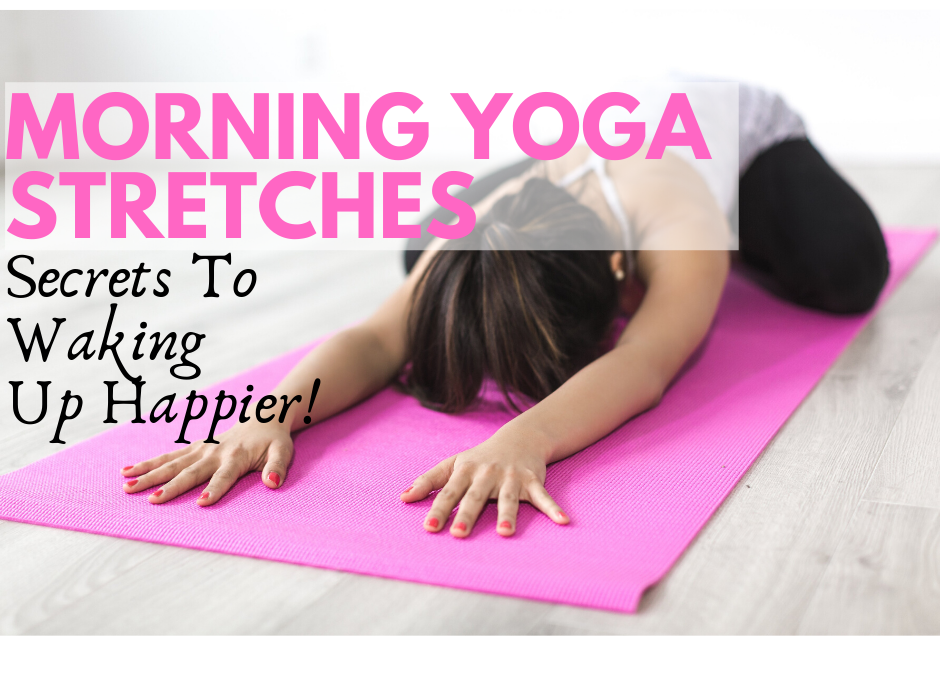
1. Child’s Pose
Child’s Pose is a commonly used resting position in yoga.
You can begin from a hands-and-knees position and gradually move your hips toward your heels while extending your arms comfortably forward.
If this position isn’t comfortable for your knees, hips, or back, you can modify it or choose another movement.
Focus on relaxed breathing rather than trying to force yourself into a particular position.
2. Cat-Cow Movement
Starting on your hands and knees, gently alternate between rounding and lengthening your spine within a comfortable range of motion.
Move slowly and coordinate the movement with your breathing.
This can be a simple way to introduce gentle spinal movement into your morning routine.
3. Low Lunge
From a comfortable standing or kneeling position, step one foot forward and gently bend the front knee.
Keep the movement controlled and avoid forcing the hips forward.
You can use your hands or a stable surface for support if needed.
Repeat on the other side.
4. Seated Bound Angle
Sit comfortably and bring the soles of your feet toward one another.
Allow your knees to move outward naturally rather than pressing them toward the floor.
Sit on a folded blanket or cushion if that makes the position more comfortable.
5. Gentle Seated Forward Fold
Sit with your legs comfortably extended or slightly bent.
Hinge forward gently from your hips while keeping the movement within a comfortable range.
You do not need to reach your feet or bring your head toward your knees.
The purpose is simply to move comfortably through the available range of motion.
6. Standing Forward Fold
From standing, gently bend your knees and hinge forward from your hips.
Allow your hands to rest wherever they comfortably reach.
Keep the movement controlled and avoid forcing your body toward the floor.
If standing forward folds cause dizziness or discomfort, choose another movement instead.
Create a Morning Routine That Works for You
You don’t need to complete a long yoga sequence every morning.
A simple routine could include:
1. Begin with a few slow breaths.
2. Move gently through a few comfortable ranges of motion.
3. Choose one or two stretches that feel appropriate for you.
4. Finish with a few moments of quiet breathing or reflection.
The entire routine could take just a few minutes.
Over time, consistency may be more useful than trying to create an elaborate routine that is difficult to maintain.
Listen to Your Body
Yoga should be adapted to the individual.
Your flexibility, mobility, balance, strength, previous injuries, and overall health can all influence which movements are appropriate for you.
Avoid comparing your flexibility or ability with someone else’s.
You don’t have to achieve a particular depth, hold a pose for a specific amount of time, or perform an advanced variation.
If a movement feels uncomfortable, modify it or choose another activity.
If you have an injury, medical condition, significant pain, balance concerns, or questions about whether a particular type of exercise is appropriate for you, consider speaking with an appropriately qualified healthcare or exercise professional before beginning.
Start Your Morning With Intention
Morning yoga doesn’t have to be about achieving the “perfect” pose.
It can simply be an opportunity to move, breathe, and pay attention to your body before beginning your day.
Whether you spend five minutes stretching or participate in a longer yoga practice, choose an approach that feels realistic and sustainable for you.
There is no single perfect morning routine.
Find a form of movement that you enjoy, adapt it to your needs, and make it something you can realistically incorporate into your lifestyle.
Disclaimer: This article provides general educational information about yoga, stretching, and healthy lifestyle habits. It is not individualized medical, exercise, or therapeutic advice and does not diagnose, treat, or prevent any medical or mental-health condition. Individual needs vary. If you have a medical condition, injury, significant pain, balance concerns, or other health considerations, consult an appropriately qualified healthcare or exercise professional about activities that are appropriate for you.