
The Lifestyle Cure provides evidence-informed health and wellness information. We may include links to products we believe may be useful to our readers. TheLifestyleCure.com participates in the Amazon Associates Program and may earn a small commission from qualifying purchases at no additional cost to you.
Yoga is a practice that combines physical postures, breathing techniques, relaxation, and mindfulness. It has been practiced for thousands of years and can be a useful addition to a well-rounded approach to physical and mental well-being.
Yoga is sometimes promoted specifically for weight loss, but it is more appropriate to view it as one component of an overall healthy lifestyle. Depending on the style and intensity, yoga can support mobility, balance, strength, body awareness, relaxation, and physical activity.
For people working toward sustainable weight management, yoga may also be helpful because it encourages greater awareness of the body and can provide an opportunity to slow down and pay attention to hunger, fullness, stress, and other physical cues.
Rather than thinking of yoga as a way to “burn off” food or guarantee weight loss, consider using it as one enjoyable form of movement that can complement your other healthy habits.
Table of Contents
How Can Yoga Support Weight Management?
Weight management is influenced by many different factors, including eating patterns, physical activity, sleep, stress, environment, and individual circumstances.
Yoga may contribute to a healthy lifestyle in several ways.
For example, a regular yoga practice can provide opportunities to:
- Increase physical activity.
- Develop strength and flexibility.
- Improve balance and body awareness.
- Practice mindfulness.
- Create time for relaxation.
- Develop a consistent movement routine.
- Explore different ways of responding to stress.
Yoga may also be an accessible option for people who don’t enjoy traditional gym-based workouts.
The most important consideration is finding forms of movement that you enjoy and can realistically incorporate into your lifestyle.
11 Yoga Poses for Beginners
The following poses can be incorporated into a beginner yoga practice. Move at a comfortable pace, avoid forcing a stretch, and modify the poses when necessary.
Before you begin: If you’re new to yoga, start slowly and consider learning these movements from a qualified yoga instructor. Modifications may be appropriate depending on your experience, mobility, and individual needs.
1. Warrior II Pose
Warrior II is a standing posture that can challenge balance and lower-body strength while encouraging awareness of body alignment.
How to practice:
- Stand with your feet comfortably apart.
- Turn one foot outward and position the other foot slightly inward.
- Bend the front knee while keeping it aligned in the direction of your foot.
- Extend your arms out to the sides.
- Keep your torso upright and your shoulders relaxed.
- Hold the position for several comfortable breaths.
- Return to standing and repeat on the other side.
Don’t force the depth of the knee bend. A smaller range of motion is perfectly appropriate for beginners.
2. Mountain Pose
Mountain Pose is a simple standing posture that can help you practice posture, balance, and body awareness.
How to practice:
- Stand comfortably with your feet grounded.
- Keep your legs relaxed but engaged.
- Lengthen your spine without forcing your posture.
- Let your shoulders relax away from your ears.
- Allow your arms to rest naturally at your sides.
- Take several slow, comfortable breaths.
Use this pose as an opportunity to notice how your body feels rather than trying to achieve a particular appearance.
3. Seated Forward Fold
A seated forward fold can be incorporated into a yoga routine to gently explore flexibility through the back of the body.
How to practice:
- Sit comfortably with your legs extended or slightly bent.
- Sit tall and lengthen your spine.
- Hinge forward from your hips rather than forcing your back to round.
- Rest your hands on your legs, feet, or the floor—wherever they comfortably reach.
- Keep your knees slightly bent if necessary.
- Hold for several comfortable breaths.
Avoid pulling yourself deeper into the stretch. The goal is comfortable movement, not maximum flexibility.
4. Downward-Facing Dog
Downward-Facing Dog is a commonly practiced yoga posture that involves the arms, shoulders, legs, and core.
How to practice:
- Begin on your hands and knees.
- Position your hands slightly in front of your shoulders.
- Tuck your toes under.
- Slowly lift your hips upward and backward.
- Keep your knees slightly bent if that feels more comfortable.
- Lengthen through your spine.
- Keep your neck relaxed.
- Hold for several breaths before returning to your starting position.
You don’t need to straighten your legs completely to practice this pose.
5. Standing Side Stretch
A standing side stretch can provide a gentle way to explore movement through the sides of your torso.
How to practice:
- Stand comfortably with your feet grounded.
- Reach your arms overhead if comfortable.
- Keep your shoulders relaxed.
- Gently lean toward one side without rotating your torso.
- Return to the center.
- Repeat on the opposite side.
Move slowly and avoid pushing into discomfort.
6. Plank Pose
Plank can be used as a strength-focused component of a yoga practice.
How to practice:
- Begin on your hands and knees with your hands beneath your shoulders.
- Step your feet back one at a time.
- Create a comfortable straight line through your body.
- Keep your neck relaxed and look toward the floor.
- Engage your core without holding your breath.
- Hold for a few comfortable breaths.
- Return to your hands and knees.
If a full plank feels too challenging, practice with your knees on the floor.
7. Tree Pose
Tree Pose is a balance-focused posture that can help develop stability and concentration.
How to practice:
- Stand comfortably with both feet on the floor.
- Shift your weight onto one foot.
- Place the other foot against your lower leg or inner thigh, avoiding direct pressure against the knee.
- Bring your hands together or let your arms rest comfortably.
- Focus your gaze on a stationary point.
- Hold for several breaths.
- Lower your foot and repeat on the other side.
Use a wall or chair for support if needed.
8. Extended Side Angle Pose
This standing posture combines a lower-body position with a gentle side-body stretch.
How to practice:
- Step your feet comfortably apart.
- Turn one foot outward.
- Bend the front knee while keeping it aligned with the foot.
- Place your forearm on your thigh if comfortable.
- Reach your opposite arm overhead.
- Lengthen through the side of your body.
- Hold for several breaths.
- Return to standing and repeat on the opposite side.
Use a yoga block or another appropriate support if reaching toward the floor feels uncomfortable.
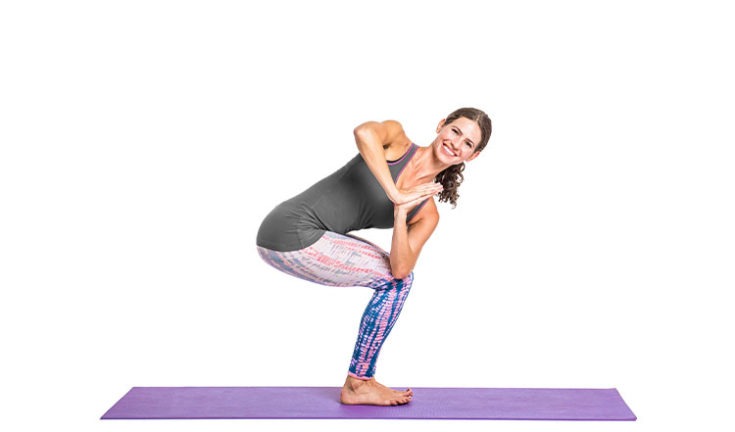
9. Chair Twist
Chair Pose with a gentle twist can add variety to a yoga practice while challenging balance and lower-body strength.
How to practice:
- Stand with your feet comfortably apart.
- Bend your knees slightly as though sitting into a chair.
- Keep your weight balanced through your feet.
- Bring your hands together in front of your chest.
- Gently rotate your torso to one side.
- Return to the center.
- Repeat on the opposite side.
Keep the movement controlled and avoid forcing the twist.
10. Cobra Pose
Cobra Pose is a gentle back-extension posture that can be incorporated into a floor-based yoga sequence.
How to practice:
- Lie on your stomach.
- Place your hands near your shoulders.
- Keep your elbows close to your body.
- Gently lift your chest while keeping your shoulders relaxed.
- Keep the movement within a comfortable range.
- Hold for several breaths.
- Slowly lower yourself back down.
There is no need to lift very high. A smaller movement may be more appropriate for beginners.
11. Reclined Bound Angle Pose
Reclined Bound Angle Pose is a gentle floor-based posture that can be used as part of a relaxing yoga sequence.
How to practice:
- Lie comfortably on your back.
- Bend your knees and bring the soles of your feet together.
- Allow your knees to move outward only as far as comfortable.
- Rest your arms wherever they feel comfortable.
- Take several slow breaths.
- Gently bring your knees back together before changing positions.
If you feel discomfort in your hips or knees, place cushions or blocks underneath your legs for additional support.
How to Incorporate Yoga Into Your Routine
You don’t need to practice yoga for hours to make it part of your lifestyle.
Start with a short session that feels realistic for your schedule. You could practice a few poses in the morning, use yoga as a movement break during the day, or include a gentle session in your evening routine.
Consistency matters more than trying to do everything at once.
You can also combine yoga with other forms of movement that you enjoy, such as walking, swimming, recreational activities, or resistance training.
The Takeaway
Yoga can be a valuable form of movement for beginners and may support strength, flexibility, balance, body awareness, and relaxation.
Rather than viewing yoga as a quick solution for weight loss, consider it one piece of a sustainable approach to your overall well-being.
Choose movements you enjoy, listen to your body, and gradually develop a routine that fits your lifestyle.
Want Personalized Support With Your Weight-Management Goals?
If you’d like support building sustainable habits that fit your lifestyle, our Weight Management Coaching can help you create a realistic and personalized approach to your goals. Reach out to us at lifestylecurecoach@gmail.com for more information.
Disclaimer: This article is provided for educational and informational purposes only. The yoga poses described are general suggestions and may not be appropriate for everyone. If you are new to yoga, consider working with a qualified yoga instructor who can provide individualized guidance and modifications based on your experience and abilities. Listen to your body, avoid movements that cause pain or discomfort, and stop if something doesn’t feel right.